$4.45
You Are Not Dying. You Are Molting.
Let’s be honest: You’re scared of the dark. Not the kind of dark where you stub your toe, but the kind of dark that starts when your body quits. We all pretend we’ve got it figured out—that death is either a final snooze button or a white-light choir rehearsal. But deep down, you know something is off. You feel that tiny, persistent tremor in your gut, the one that tells you the human version of you is just temporary housing.
I’m Maria Morrison, and I don’t write textbooks. I write conversation bombs. And the biggest bomb of all is this: What if the scariest part of death is discovering you were never human in the first place?
If that question jolted you, good. Pay attention.
We’re taught to fear the end. Culture and society spend billions to keep us obsessed with the finite, controllable things—jobs, status, what the neighbors think. Why? Because someone who knows they are evolving into pure awareness—a creature that doesn’t need breath or bone—is impossible to control. This book is about pulling back the curtain on that fear. It’s about why your own mind protects you from the real you, and why society pretends death is an ending.
But here’s the truth that sets you free: You are already evolving, even while alive.
This isn’t just about what happens after you die. This is about what’s happening right now. That sharp, beautiful pain of grief you carry? It’s not a malfunction; it’s a training manual. It’s teaching your consciousness how to stretch, how to survive without the physical anchor. What if grief is training for the after-human?
And those people you’ve lost? They don’t feel gone, do they? They feel different. That’s because your relationships don’t end—they mutate. This book cracks open that stunning, terrifying reality: What if the dead are not behind you… but ahead, waiting? They are the species we will all become, and they are watching us slowly shed the skin of our anxiety, our old habits, and our self-doubt.
Every struggle, every tiny victory, every moment of raw courage you’ve scraped up—it’s not random suffering. Every hard thing you’ve lived through is building the creature you’ll become.
You are not broken. You are becoming. You are a work-in-progress, and this human life is your intense, personalized apprenticeship. If you become pure awareness when you die, then the only luggage you carry into the next life is the person you became in this one.
This book is a nudge, a mirror, a necessary wake-up call. It’s time to stop waiting for transformation to happen after the final breath. The next version of you is already waking up beneath your habits and your choices.
Stop asking what you’ll lose when you die. Start asking what kind of consciousness you will take with you.
I wrote this for the quietly curious, for the thinkers and the tinkerers—for the people who’ve seen some things and are ready to grow through them. If you’re done with the soft answers and the easy clichés, and you’re ready for the astonishing truth about your own evolution, then you need this book. You need to know the hidden power in understanding that you don’t stay human forever.
I need this book. I’m done waiting.
The After-Human is not waiting. It’s growing inside you. What if the being you’ll become after death is already watching you from inside?
The journey begins now. Are you ready to meet the species you are destined to be?
You are not who you think you are.
Let’s just get that out of the way. Stop clinging to your skin. Stop treating your breath like the only thing that matters. We need to talk about what happens when the lights go out, and I don’t mean some airy-fairy, cloudy, choir-singing nonsense.
I mean the raw, terrifying, utterly astonishing truth: You are not dying. You are molting.
You came here thinking this body was the main event. You’re wrong. This is the rehearsal. This life? It’s the training montage before the main character finally unlocks their real power. The human you are right now is temporary housing for a consciousness that is already practicing for its exit.
Here are the Chapter Titles:
SECTION I — PSYCHOLOGICAL / BEHAVIORAL
(How the mind reacts to the idea of becoming something beyond human.)
Chapter 1: “The Human Mind Was Built for Survival—Not Truth”
Summary:
A dark look at how your brain hides certain realities because it knows you aren’t ready to handle them—especially the reality that your consciousness is temporary housing.
Conversation Bomb:
What if your mind has been protecting you from the real you?
Chapter 2: “The Moment You Realize You’re Not Fully Human Anymore”
Summary:
This chapter explores the mental quake that happens when you stop treating consciousness as an accessory and start treating it as a creature waiting to outgrow you.
Conversation Bomb:
What if the scariest part of death is discovering you were never human in the first place?
Chapter 3: “The Quiet Panic of Knowing There’s More After This”
Summary:
Why the brain tightens, pauses, and trembles when it senses there’s another version of itself beyond the body—a version that doesn’t need breath or bone.
Conversation Bomb:
Why does your mind shake at the idea that it keeps going when your body doesn’t?
Chapter 4: “When Your Thoughts Start Acting Like They Want Out”
Summary:
Explores dreams, déjà vu, and those eerie moments when your awareness behaves like it has its own hunger—like it’s practicing for a future without your skin.
Conversation Bomb:
What if your thoughts are rehearsing for the day they no longer need your brain?
SECTION II — INTERPERSONAL / RELATIONAL
(How consciousness evolution affects relationships, love, loss, and connection.)
Chapter 5: “Why the Dead Don’t Feel Gone—They Feel Different”
Summary:
Examines the eerie shift we feel when someone dies—not absence, but a change in presence, like their consciousness slipped into a form we don’t have words for.
Conversation Bomb:
What if the reason you still feel them… is because they didn’t leave?
6. “Your Relationships Don’t End—They Mutate”
Summary:
A haunting dive into the idea that connection survives death because consciousness simply changes format, like a file changing extensions.
Conversation Bomb:
What if love doesn’t break when someone dies—only the container does?
Chapter 7: “The People You Miss Already Know What You’ll Become”
Summary:
Explores the taboo belief that the departed aren’t ahead of us—they’re already who we’re becoming, watching us molt in slow motion.
Conversation Bomb:
What if the dead are not behind you… but ahead, waiting?
Chapter 8: “Your Grief Is a Map to the Next Version of You”
Summary:
Shows how grief bends your consciousness, stretches it, cracks it open—teaching you how to survive without a physical body long before you actually lose yours.
Conversation Bomb:
What if grief is training for the after-human?
SECTION III — SOCIETAL / CULTURAL
(How cultures shape, manipulate, or fear the idea of what comes after human life.)
Chapter 9: “Why Society Pretends Death Is an Ending”
Summary:
A bold look at how cultures fear the idea of after-human evolution because it removes control, order, and predictability.
Conversation Bomb:
What if we hide the truth about death because it makes us impossible to control?
Chapter 10: “The Hidden Power in Knowing You Don’t Stay Human Forever”
Summary:
Explores why governments, institutions, and media downplay consciousness—because someone who knows they evolve into something bigger becomes unstoppable.
Conversation Bomb:
What if the most dangerous person alive is the one who knows death isn’t the end?
Chapter 11: “The Stories We Tell to Keep the After-Human a Secret”
Summary:
Unpacks myths, legends, and harmless bedtime stories that gently cover the real possibility: humans were never meant to stay human.
Conversation Bomb:
What if the truth was never lost—just softened so we wouldn’t panic?
Chapter 12: “Culture Trains You to Fear the Very Thing You’ll Become”
Summary:
Shows how society teaches you to fear the unknown, even though your consciousness is slowly preparing to become part of it.
Conversation Bomb:
What if fear is the lock that keeps you from opening your next form?
SECTION IV — SELF-HELP / TRANSFORMATIONAL
(How understanding the after-human helps us grow, heal, and reclaim agency.)
Chapter 13: “You Are Already Evolving—Even While Alive”
Summary:
Shatters the belief that transformation happens after death; instead, the after-human begins forming now, beneath your habits, wounds, and choices.
Conversation Bomb:
What if the next version of you is already waking up?
Chapter 14: “Your Life Is the Training Manual for What Comes Next”
Summary:
A transformative look at why struggle, forgiveness, curiosity, compassion, and courage shape the being you will become after your body is done.
Conversation Bomb:
What if every hard thing you’ve lived through is building the creature you’ll become?
Chapter 15: “Becoming the Kind of Consciousness You’d Want to Live With”
Summary:
Explores agency and empowerment: If you become pure awareness after death, then the way you shape your mind now determines what you take with you.
Conversation Bomb:
What if the only luggage you carry into the next life is the person you became in this one?
Chapter 16: “The After-Human Is Not Waiting—It’s Growing Inside You”
Summary:
The final chapter reveals that the after-human isn’t a future event—it’s an inner evolution already unfolding every time you heal, question, risk, and grow.
Conversation Bomb:
What if the being you’ll become after death is already watching you from inside?
Ready for a truth bomb?
What if the scariest part of death is discovering you were never human in the first place?
You think your life is about paying bills, finding love, and figuring out what to watch next on Friday night. Cute. It’s actually about training the creature you’re becoming—the creature that doesn’t need lungs, a face, or a zip code.
Stop Faking. Start Feeling the Quake.
Your mind, bless its little heart, was built for one thing: survival—not truth. It’s a bouncer at the door of your consciousness, carefully choosing which realities you’re sturdy enough to handle. And the idea that you are temporary? That your awareness is a tenant with an expiration date, waiting to outgrow the whole damn structure? Your brain hides that. It puts that reality on a dark shelf, hoping you won’t notice the tremors.
What if your mind has been protecting you from the real you?
You get those flashes, right? That sudden ping of déjà vu that feels like a glitch in the Matrix. That dream where you were flying without wings, seeing without eyes, understanding without words. Your brain calls those “weird moments.” I call them practice. Your thoughts, your awareness—they’re stretching, testing the perimeter. They’re acting like they have their own hunger, like they want out.
What if your thoughts are rehearsing for the day they no longer need your brain?
That quiet panic you feel when you let your mind wander too far into the after—that sudden clench, that jolt back to the tangible? That’s your brain tightening its grip. It trembles at the idea of you continuing without it, without bone and breath. Because a mind that knows it keeps going is a mind that can’t be easily led.
We will get to why society hates that idea in a minute.
You need to feel that mental quake. That’s the sound of the shell cracking.
The Love That Changes Format
We are so obsessed with endings. The final curtain. The last chapter. But what about the people you’ve lost? When someone you loved dies, does it feel like they just vanished? Like a radio suddenly unplugged?
No. It feels different. It feels like an eerie shift in presence.
It’s not an absence; it’s a change in the air pressure of your life. Like their consciousness slipped into a form we don’t have the right words for yet. You feel them, right? Not their ghost, but their differentness.
What if the reason you still feel them… is because they didn’t leave?
We treat love like a physical object. If the person is gone, the love must be broken. No. That’s clinging to the container. The connection survives because consciousness simply changes format—like a file changing from a .doc to a .pdf. The information is still there, just in a different extension.
What if love doesn’t break when someone dies—only the container does?
This is where the real mind-twist happens. The people you miss? They’re not waiting behind you. They’re ahead. They are already the species we are all becoming. They are not the departed; they are the molted. They’ve finished this lesson.
What if the dead are not behind you… but ahead, waiting?
And that crushing, world-bending agony we call grief? We treat it like a sickness to get over. What if it’s actually a curriculum? Grief bends your consciousness, stretches it, cracks it wide open. It teaches you how to function without a physical anchor. It’s training for your own exit. It’s hard, messy, awful. But it’s essential.
What if grief is training for the after-human?
(Speaking of messy and awful, if you’re still carrying the clutter of old resentments, it’s going to slow down your molting process. Trust me on that one. This whole Maria-verse of work—from decoding dreams to tackling self-worth—it’s all about clearing the runway for the creature you’ll become.)
Don’t Let Them Control Your Exit.
Let’s get controversial. Why does society push this idea that death is the end? That you become dirt and memory and nothing more? It’s not about spiritual belief; it’s about control.
A culture that fears after-human evolution is a culture that gets to maintain control, order, and predictability. They want you thinking small, thinking finite, thinking you need their rules and their structure to survive this life.
What if we hide the truth about death because it makes us impossible to control?
Think about it. Someone who knows they evolve into something bigger—something pure awareness—becomes unstoppable. They are not afraid of losing their job, their possessions, or their earthly status. They have a panoramic view. They are immune to the small, petty fear tactics that run our world.
What if the most dangerous person alive is the one who knows death isn’t the end?
And they train you for this fear. They tell you stories, softened myths, bedtime narratives that gently cover the real possibility: You were never meant to stay human. They teach you to fear the unknown, the ethereal, the different.
What if fear is the lock that keeps you from opening your next form?
Your Life Is the Training Manual
Okay, so we’ve established that your life is not a final destination, it’s a chrysalis. But here’s the crucial part: you are not waiting to evolve. You are already evolving—even while alive.
The after-human isn’t a future event. It’s forming now—beneath your habits, your wounds, and your daily choices.
What if the next version of you is already waking up?
Every difficult thing you’ve lived through—the struggle, the forgiveness you had to grit your teeth to give, the courage it took to just get out of bed this morning—it’s not random suffering. It’s building the creature you’ll become.
What if every hard thing you’ve lived through is building the creature you’ll become?
You are becoming pure awareness. You are taking the person with you. That means the way you shape your mind now determines the consciousness you carry into the next phase. Are you shaping a wise, kind, curious, forgiving awareness? Or a bitter, cluttered, tiny, fearful one?
What if the only luggage you carry into the next life is the person you became in this one?
This is the ultimate self-help, the core of all transformation. It’s not about finding yourself; it’s about becoming the kind of consciousness you’d want to live with—forever.
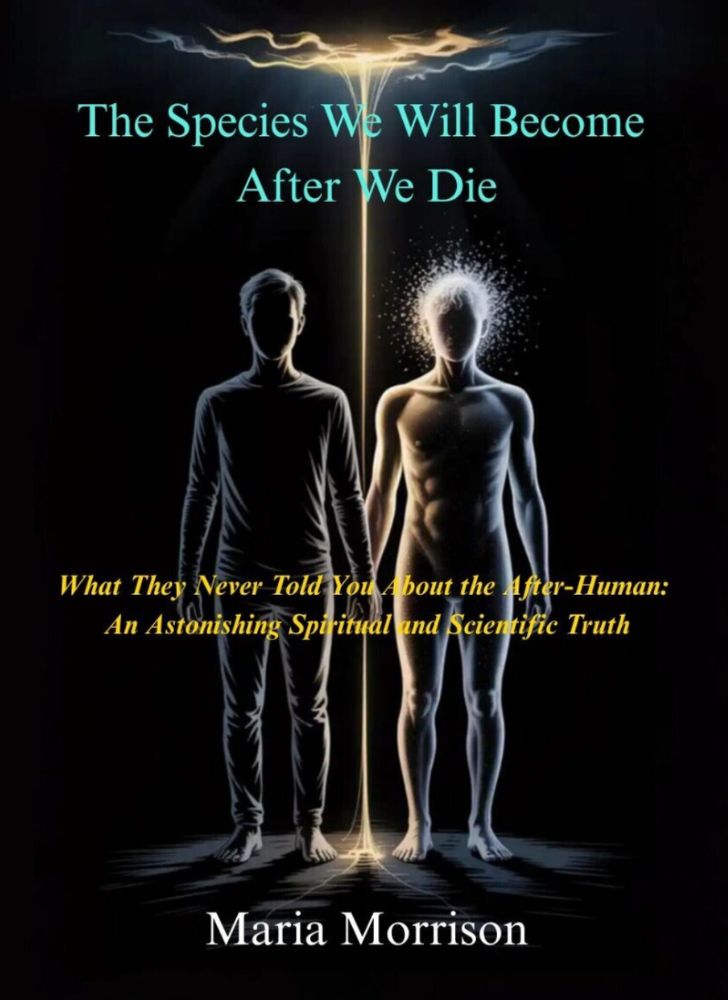
The Species We Will Become After We Die is not a textbook on how to be good. It’s an emotional X-ray vision into your own mind. It’s a series of intellectual conversation bombs designed to make you stop, think, and look at the person in the mirror as a temporary, glorious, learning organism.
This book will make you look at your life not as a destination, but as the training manual for what comes next.
The after-human is not waiting. It’s growing inside you. Every time you heal, every time you risk, every time you grow. It’s already watching you.
Get ready to look at your life differently. Get ready to ask the question no one else dares to:
What if the being you’ll become after death is already watching you from inside?
Because once you know the answer to that, everything changes.
Maria Morrison is an author who believes that the right words at the right time can shift how we think, feel, and move forward. Her writing is clear, encouraging, and easy to follow created for readers who want meaningful ideas without heavy, complicated language. Each eBook is designed to be something you can return to again and again, whether you’re looking for a moment of calm, a new perspective, or a fresh way to see everyday life.
On MariaMorrisonBooks.com, her titles are organized into three simple categories to help you find what fits your mood and goals. ‘Deep Thoughts’ focuses on reflection, mindset, and the bigger questions we all think about. ‘In Addition To….’ shares extra insights and practical ideas that support daily life and personal development. ‘Unique Topics’ explores interesting subjects that don’t always fit into the usual boxes, perfect for curious readers who enjoy discovering something different. Each book is designed to inspire thought and reflection, truly “books that make you think about, What you’ve never thought about.”
Maria’s goal is to make your reading experience smooth from start to finish: choose a book, check out easily, and enjoy instant digital access. Whether you’re starting with one title or exploring a full category, you’ll find uplifting reads made to inspire, inform, and encourage your next step.
Questions, feedback, or support Maria will get back to you soon.