$4.45
This isn’t just about reading a book. This is about stepping onto the battlefield of radical self-honesty and finally winning the war against your own emotional drama.
You’re exhausted, aren’t you? Whether you’re the one who wakes up every morning feeling like the universe plays favorites (and you’re losing), or you’re the one constantly holding the flashlight for someone else’s darkness—that cycle of helplessness and burnout has to end.
I’ll just say it: your biggest problem isn’t bad luck or toxic people. Your biggest problem is the silent, sneaky agreement you or someone close to you has made to let the drama run the whole damn show. It’s time to break that contract. You don’t just want to stop feeling like garbage; you NEED TO reclaim your energy and integrity before the endless complaining collapses your life or your relationships entirely.
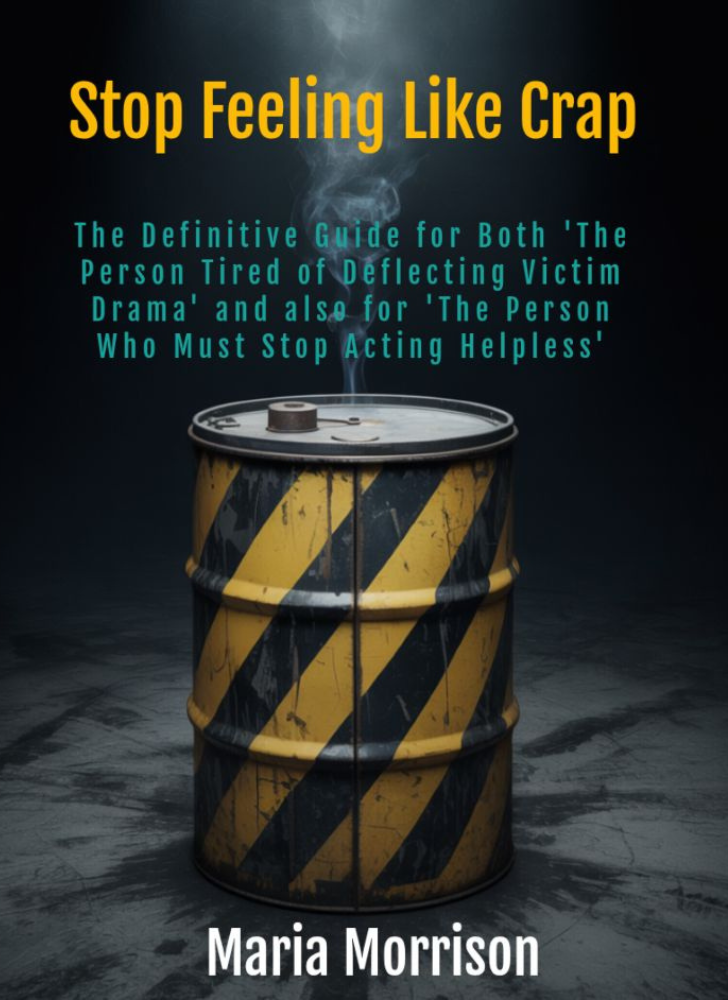
I’m talking about “Stop Feeling Like Crap:
The Definitive Guide for Both The Person Tired of Deflecting Victim Drama and also for Person Who Must Stop Acting Helpless”.
The Irresistible Truth & The Stop-Dead Moment
We’ve all tried the usual advice—just think positive!—which is about as useful as a screen door on a submarine. Forget that noise. This book offers a Unique Mechanism to solve your drama problem: The Power Flip. We stop focusing on the unfairness of the world and start weaponizing our reaction.
What’s the irresistible part? We expose the secret payoff you’re getting for being miserable. That’s the cold, hard truth of The Hidden Gifts of Complaining, revealing why the pity, the special attention, and the ultimate free pass from responsibility feels so good. The moment you see that comfort for what it is—a cage—you’ll be ready to break free.
What will stop you dead in your tracks? Realizing you’ve been sabotaging your deepest connections. The terrifying reality of The Wall Around Your Heart will hit you like a punch—your refusal to own even the smallest mistake creates a chasm in your partnership, replacing real love with cold resentment. You need to read this to understand that the drama isn’t external; it’s a self-inflicted prison.
The Clarity: From Blame to Blueprint
We offer a clear path, an emotional GPS from your messy Beginning Point to a powerful Ending Point.
We start by dissecting the problem from all angles:
In My Problems Are Everyone Else’s Fault, we examine how pushing all blame onto bad luck or others keeps you believing you have zero control over your own life.
Why Bad Things Keep Happening (to Me!) pulls the curtain back on the dark art of the victim who hunts for small problems, expertly confirming their own worst-case scenario.
Using Sadness to Get Your Way reveals how tears or playing lost is a form of emotional blackmail that preys on kind-hearted people.
If you’re the exhausted friend, The Person Who Always Needs a Hero defines the Rescuer trap, explaining why constantly saving someone leaves you stressed, drained, and burned out.
And for those well-meaning helpers, When Being Kind Makes Things Worse shows how too much sympathy, without any challenge, actually enables the drama, hurting the person you mean to help.
The Pivot is the ultimate benefit. You will learn to recognize the exact moment you transition from victim to owner.
The Big Step: Taking Complete Ownership gives you the simple, definitive rule: you can’t control what happens, but you always control your reaction. That’s your moment of power.
You’ll rewire your brain in Changing Your Words, Changing Your Life, learning to trash helpless language like “I can’t” and replacing it with the action-triggering question, “How can I start?”
Rules for Staying Sane Around a Complainer offers the practical roadmap you’ve been desperate for—clear steps to set boundaries and prevent yourself from getting dragged into endless drama.
The Culture & The Call-to-Arms
This isn’t just internal work. We zoom out to see the social battlefield:
We expose The Suffering Olympics: Competing for Attention Online, where people perform their pain on social media to fish for sympathy and likes.
We unpack The Power of “My Group is Oppressed,” exploring how using group victimhood, while unifying, can ironically halt real problem-solving.
Victimhood as a Moral Shield reveals how this stance is used to dodge criticism or avoid the necessity of an apology in any argument.
And finally, we fight back against The Marketing of Anxiety, showing how businesses profit by making you feel scared and small so they can sell you security.
You will noticed that the book closes the loop with Dropping the Fight: Why Forgiveness Frees You. You will be shown that forgiveness is not only a gift to the person who hurt you—instead it is the only way to break the chain of anger that tethers you to the past. We then build unstoppable momentum with The Power of Small Wins, a step-by-step plan for building rock-solid confidence by starting small and proving your competence one micro-victory at a time.
This is your invitation to finally stop watching your life on a screen and start directing it. You will gain emotional resilience, unbreakable boundaries, and the clarity to pursue your goals without the dead weight of blame. Get the book. Take the power back.
STOP! Put down the emotional sponge and walk away from the drama.
Jumping into the victim mindset isn’t just a bad habit; it’s an alchemical process that turns your potential into toxic sludge, and worse, it turns the people who love you into exhausted, resentful Rescuers. You know the drill—you’re either the person who’s wearing the world’s weight as a badge of honor, or you’re the poor soul standing next to them, trying not to drown in the overflow.
It’s time to say it: “Stop Feeling Like Crap: The Definitive Guide for Both The Person Tired of Deflecting Victim Drama and also for Person Who Must Stop Acting Helpless” isn’t a fluffy self-help book; it’s a manifesto for emotional self-defense.
I know what it’s like. I spent my twenties feeling like the universe had a vendetta against me. Every minor setback was proof of a cosmic conspiracy. It felt safer, honestly. That’s the insidious twist we unpack in The Hidden Gifts of Complaining—why the victim feels comfortable, because failure isn’t your fault, and attention is guaranteed. The moment you push all My Problems Are Everyone Else’s Fault, you believe you have no control, which is terrifying, but also weirdly freeing from responsibility.
This book is the unvarnished truth, the kind of conversation you have at 3 AM with your soul when you’re tired of the lies.
Unpacking the Drama-Addiction
Have you ever stopped to think about Why Bad Things Keep Happening (to Me!)? It’s not fate; you become an expert at finding the worst-case scenario just to prove your victim story is right. Some people even learn Using Sadness to Get Your Way, turning tears or a lost look into a kind of emotional blackmail that works beautifully on kind, unsuspecting people.
And if you’re the one stuck constantly pulling the complainer out of the ditch, you’re caught in The Person Who Always Needs a Hero trap, which makes you tired, stressed, and totally burned out. This whole messy dynamic is enabled by well-meaning friends in When Being Kind Makes Things Worse, where endless sympathy stops someone from ever pushing for real change.
Want to know why your relationship feels cold? Look at The Wall Around Your Heart—that refusal to own your mistakes makes any real connection impossible, replacing intimacy with resentment.
The Great Escape: Your New Power
But here’s the exhilarating part: You can walk out of the prison today.
For the Rescuer, Chapter 8 delivers the ultimate tool: Rules for Staying Sane Around a Complainer. These are simple, clear steps for drawing firm boundaries so you don’t get sucked into the endless drama cycle.
For the complainer, the freedom begins with The Big Step: Taking Complete Ownership. The simple, non-negotiable rule is that you can’t control what happens to you, but your reaction? That’s yours, and that’s the moment you become truly powerful. You’ll master Changing Your Words, Changing Your Life, swapping those helpless “I can’t” phrases with questions of action like “How can I start?”
We don’t stop there. True release comes from Dropping the Fight: Why Forgiveness Frees You. It’s not for them; it’s for you, cutting the anger that ties you to the past. From there, we build unstoppable momentum with The Power of Small Wins, a step-by-step plan to build confidence by proving to yourself, through small actions, that you are absolutely capable.
The Grand, Messy Truth
We pull back the curtain on the entire cultural landscape of victimhood. Ever notice that people online are competing for pity? That’s The Suffering Olympics: Competing for Attention Online, where social media rewards the saddest story with likes and validation. We’ll look at the cynical side of The Power of “My Group is Oppressed,” exploring how group victimhood can stop people from solving their own problems. We even explore how Victimhood as a Moral Shield is used to avoid criticism or having to apologize in an argument.
And yes, we expose the machine itself in The Marketing of Anxiety, showing how businesses profit by making you feel scared and helpless so they can sell you their expensive, comforting solutions.
This Book is your wrench, your blueprint, and your self-defense kit. You’ll gain emotional X-ray vision, reclaim your personal energy, and finally understand that the drama is a choice, not a curse. Stop waiting for a hero. Stop being a sponge. Get the book.
Chapter 1: The Hidden Gifts of Complaining
Why being the victim can feel comfortable. It gives you special attention, and you don’t have to feel bad when you fail because it wasn’t your fault.
Chapter 2: My Problems Are Everyone Else’s Fault
How a victim mindset makes you push all the blame onto other people or bad luck. You believe you have no control over your own life.
Chapter 3: Why Bad Things Keep Happening (to Me!)
How people who see themselves as victims look for small problems just to prove their story is right. They become experts at finding the worst-case scenario.
Chapter 4: Using Sadness to Get Your Way
Explains how someone uses tears or acting lost to get others to do things for them. This is a type of emotional blackmail that works on kind people.
Chapter 5: The Person Who Always Needs a Hero
Explains the “Rescuer” trap. The victim pulls other people in to constantly save them, which makes the Rescuer tired, stressed, and burned out.
Chapter 6: When Being Kind Makes Things Worse
How well-meaning friends hurt the victim by only giving sympathy and never pushing them to change. Too much kindness becomes enabling.
Chapter 7: The Wall Around Your Heart
How refusing to own your mistakes makes it impossible to have a real, close connection with a partner. It causes resentment and keeps others away.
Chapter 8: Rules for Staying Sane Around a Complainer
Simple, clear steps for how to draw firm boundaries with the person so you don’t get pulled into their constant drama. (This is a huge practical selling point.)
Chapter 9: The Big Step: Taking Complete Ownership
Taking Complete Ownership” – Simple Explanation: The simple rule: You can’t control what happens to you, but you can always control how you react to it. This is the moment you become powerful.
Chapter 10: Changing Your Words, Changing Your Life
Simple Explanation: A guide to removing helpless words like “I can’t” and “It’s impossible” and replacing them with questions of action, like “How can I start?”
Chapter 11: Dropping the Fight: Why Forgiveness Frees You
Explains that forgiveness is not for the person who hurt you; it’s for you. It’s about letting go of the anger that ties you to the past.
Chapter 12: The Power of Small Wins
Simple Explanation: A step-by-step plan for building confidence by starting small. Every time you solve a small problem, you prove to yourself that you are capable.
Chapter 13: The Suffering Olympics: Competing for Attention Online
How social media rewards people for sharing the saddest or most unfair things that have happened to them. People compete for sympathy and likes by acting like the biggest victim.
Chapter 14: The Power of “My Group is Oppressed”
Exploring how some social or political groups use the idea of being a victim to gain power. It can make people feel united, but it also stops them from solving their own problems.
Chapter 15: Victimhood as a Moral Shield
How saying “I’m a victim” can be used as a way to avoid criticism or having to apologize. It puts the person above judgment in an argument.
Chapter 16: The Marketing of Anxiety: Buying Solutions for Fear
How businesses use the message that the world is a scary place (making you feel like a victim) so they can sell you products or services that promise security or comfort.
Maria Morrison is an author who believes that the right words at the right time can shift how we think, feel, and move forward. Her writing is clear, encouraging, and easy to follow created for readers who want meaningful ideas without heavy, complicated language. Each eBook is designed to be something you can return to again and again, whether you’re looking for a moment of calm, a new perspective, or a fresh way to see everyday life.
On MariaMorrisonBooks.com, her titles are organized into three simple categories to help you find what fits your mood and goals. ‘Deep Thoughts’ focuses on reflection, mindset, and the bigger questions we all think about. ‘In Addition To….’ shares extra insights and practical ideas that support daily life and personal development. ‘Unique Topics’ explores interesting subjects that don’t always fit into the usual boxes, perfect for curious readers who enjoy discovering something different. Each book is designed to inspire thought and reflection, truly “books that make you think about, What you’ve never thought about.”
Maria’s goal is to make your reading experience smooth from start to finish: choose a book, check out easily, and enjoy instant digital access. Whether you’re starting with one title or exploring a full category, you’ll find uplifting reads made to inspire, inform, and encourage your next step.
Questions, feedback, or support Maria will get back to you soon.