$4.45
You have been carrying a weight that isn’t yours.
And nobody told you.
You think the exhaustion, the resentment, the tight jaw, the silent crying in the laundry room — you think that’s just part of loving someone with Alzheimer’s. You think suffering is proof you care. That’s the modern lie. It’s a slow-leak drought of the soul, and folks wear it like a badge of honor.
But here’s the truth: half your pain isn’t coming from dementia.
It’s coming from the story you’ve been telling yourself about it.
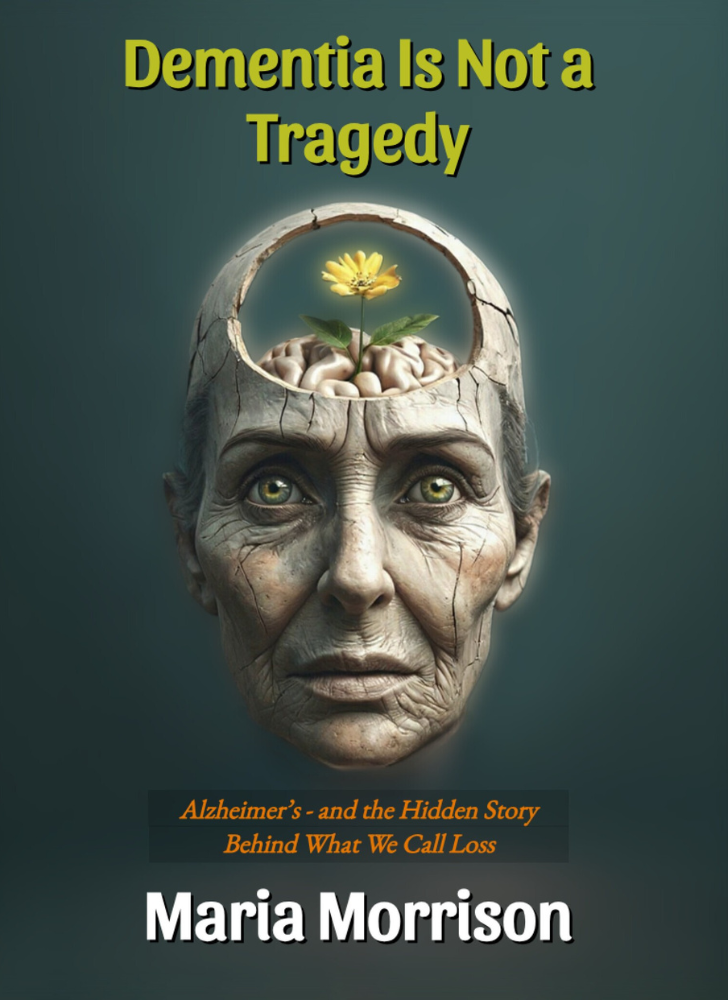
Dementia Is Not a Tragedy: Alzheimer’s and the Hidden Story Behind What We Call Loss is not a comfort blanket. It’s a hard cedar chair on the porch where we sit down and look something straight in the eye. This book offers something you won’t find in the usual pamphlets and polite support groups.
It offers permission to stop taking it personally.
That’s the hidden treasure.
Inside this book is a realization that will stop you dead in your tracks: neurological changes are not personal attacks. The repeated questions are not disrespect. The confusion is not betrayal. The sharp words are not calculated cruelty.
If you keep reacting like they are, you are gonna burn yourself to ash.
I learned that the hard way.
Years ago, after a brutal winter that killed half our chickens and nearly froze the pipes, I remember snapping at my grandmother because she kept asking the same question about the feed order. I was tired. Frayed. I thought she wasn’t listening. She put her hand on the porch railing and said, “Child, don’t wrestle the wind. Adjust your coat.”
That lesson comes back to me every time I see a caregiver fighting the storm of Alzheimer’s like it’s a personal insult. You don’t fight weather. You build differently.
Here’s the unique mechanism this book gives you — not patience, not “positivity,” not pretending it’s easy. It gives you emotional detachment without emotional abandonment.
That means you stay. You love. You show up. But you stop absorbing every symptom like it’s a verdict on your relationship. You separate the disease from the person. You respond with steadiness instead of fire.
And that shift? It changes everything.
Right now you’re standing on city sidewalks — noisy, reactive, defensive. Every behavior feels like erosion. You correct, you argue, you explain. You go to bed exhausted.
This book walks you toward the quiet homestead.
Step one: Understand the neurological truth so you stop personalizing the symptoms.
Step two: Reinterpret what you call “loss” so your grief doesn’t turn into resentment.
Step three: Replace correction with calm presence.
Step four: Protect your own peace so you can keep caring without collapsing.
That’s the path. Clear. Practical. Doable.
Here’s what you gain:
You sleep better because you’re not replaying arguments that never needed to happen.
You conserve emotional energy instead of wasting it on battles you can’t win.
Your tone softens, and their agitation drops.
Your home feels steadier.
Your neighbors see strength in you, not strain.
And most importantly, your heart doesn’t harden.
The crystal clear problem this book solves is this: you are drowning in emotional friction. Not just caregiving chores — emotional friction. This book removes it.
It hands you a squeezed-lemon kind of clarity you can feel in your palm. Simple. Direct. Not soft.
You don’t have to crumble every time memory does.
You don’t have to mourn what isn’t gone the way you thought.
You don’t have to turn Alzheimer’s into a tragedy in order to prove you love someone.
If you are ready to stop fighting the wind and start adjusting your coat…
If you are ready to protect your peace while still showing up…
If you are ready to build your caregiving on stone instead of panic…
Then pick up this book.
Some folks live their whole lives wrestling storms.
Others learn how to stand steady in them.
Decide which one you’re gonna be.
What you have been told about Alzheimer’s is just not true.
Not by cruel people. Not by doctors trying to do harm. But by a culture that cannot sit still with discomfort. We’ve been trained to call it nothing but tragedy. Nothing but theft. Nothing but loss. And that lie? It’s breaking caregivers faster than the disease itself.
Here’s the hard truth nobody says out loud on the hospital floor: sometimes the terror around dementia lives more in the minds of the healthy than in the mind that’s changing.
That’s the modern lie.
We’ve built this whole story that Alzheimer’s is a thief in the night, dragging our loved ones off into darkness. But what if that story is wrong? What if it’s incomplete? What if the panic, the grief, the tightening in your chest every time they repeat themselves isn’t coming from what’s happening to them — but from what you think it means?
This book, Dementia Is Not a Tragedy: Alzheimer’s and the Hidden Story Behind What We Call Loss, is not here to pat your back and tell you to “stay positive.” I don’t do fluff. I don’t sell fairy tales. I work in dirt and cedar and stone. And this book is built like an adobe wall — steady, grounded, and not afraid of weather.
Inside these pages is something most Alzheimer’s books won’t touch: the possibility that dementia is not a personal attack. It’s not betrayal. It’s not intentional cruelty. It is a changing brain. And if you keep treating it like an insult, you’re gonna exhaust yourself to the bone.
In Chapter 2, The “Fear Belongs to the Observers” Perspective, we get honest about something uncomfortable: the panic is often ours. We’re afraid of losing control. Afraid of being forgotten. Afraid of what this says about identity. That fear leaks into every interaction. And when you learn to separate your fear from their neurological change, something shifts. You breathe easier. They do too.
In Chapter 3, The “Identity Is a Story We Cling To” Perspective, I ask a question most folks never consider: if memory builds identity, and memory loosens, what if the core person isn’t disappearing — just shedding narrative? That realization alone can lower the temperature in your home by ten degrees.
Let me tell you something my grandmother taught me on a winter porch after a hard season when the goats got sick and we thought we’d lose half the herd. She said, “Child, don’t fight the weather. Tend to the living.” I didn’t understand it then. I do now. Alzheimer’s is weather. You don’t curse the sky. You adjust your chores.
Chapter 4, The “Hidden Mercy” Perspective, will stop you cold. What if dementia is nature’s anesthesia for a lifetime of accumulated weight? What if loosening memory is not always cruelty, but relief? That idea alone has made grown men sit back and stare at the wall.
Dead stop moment: research shows emotional tone is often felt long after names are forgotten. Let that sink in. They may not recall your birthday. But they feel your irritation. They feel your calm. Your steadiness becomes their anchor. That changes how you walk into a room.
In Chapter 6, The “Language Is the Cage” Perspective, we talk about how arguing facts is a losing chore. When language unravels, clinging to words as proof of reality is like trying to fence in wind. You learn to prioritize peace over precision. And that right there? That will help you sleep better at night.
This book doesn’t tell you to abandon your loved one. It teaches emotional detachment without emotional abandonment. That means you stop taking every accusation personally. You stop trying to correct every misplaced memory. You respond with gentleness and humor instead of fire. And in Chapter 7, The “Love Without Memory” Perspective, you’ll see how love doesn’t depend on recall. It depends on presence.
By the time you reach Chapter 8, The “Evolutionary Reinterpretation” Perspective, you’ll be looking at dementia through a lens you didn’t know you had. What if this is not malfunction but feature? What if we’ve misread the entire thing?
This is not denial of medical reality. This is reframing meaning.
Here’s the clear path.
Right now, you’re on city sidewalks — noisy, reactive, worn thin. Every symptom feels like a jab. Every repeated question feels like erosion. You’re tired. Maybe resentful. Maybe ashamed for feeling resentful.
This book walks you toward the quiet homestead. A place where you understand the neurological shifts. Where you don’t personalize confusion. Where your calm steadies the room. Where you know when to correct and when to chill out and pour the tea instead.
The benefits are practical, not poetic.
You’ll argue less.
You’ll conserve emotional energy.
You’ll sleep deeper because you’re not fighting reality.
You’ll walk into the room with steadiness instead of dread.
Your neighbors will see strength in you, not strain.
You’ll have a foundation that doesn’t crumble every time memory does.
And maybe — just maybe — you’ll stop grieving something that isn’t gone the way you thought it was.
If you are ready to stop living inside the cultural panic…
If you are ready to protect your own heart while still showing up…
If you are ready to take responsibility for your interpretation instead of blaming the weather…
Then pick up this book.
Some folks complain about the storm.
Others learn how to build with stone.
Which one are you gonna be?
Maria Morrison is an author who believes that the right words at the right time can shift how we think, feel, and move forward. Her writing is clear, encouraging, and easy to follow created for readers who want meaningful ideas without heavy, complicated language. Each eBook is designed to be something you can return to again and again, whether you’re looking for a moment of calm, a new perspective, or a fresh way to see everyday life.
On MariaMorrisonBooks.com, her titles are organized into three simple categories to help you find what fits your mood and goals. ‘Deep Thoughts’ focuses on reflection, mindset, and the bigger questions we all think about. ‘In Addition To….’ shares extra insights and practical ideas that support daily life and personal development. ‘Unique Topics’ explores interesting subjects that don’t always fit into the usual boxes, perfect for curious readers who enjoy discovering something different. Each book is designed to inspire thought and reflection, truly “books that make you think about, What you’ve never thought about.”
Maria’s goal is to make your reading experience smooth from start to finish: choose a book, check out easily, and enjoy instant digital access. Whether you’re starting with one title or exploring a full category, you’ll find uplifting reads made to inspire, inform, and encourage your next step.
Questions, feedback, or support Maria will get back to you soon.